Blockquotes, Nested Quotes & Callouts
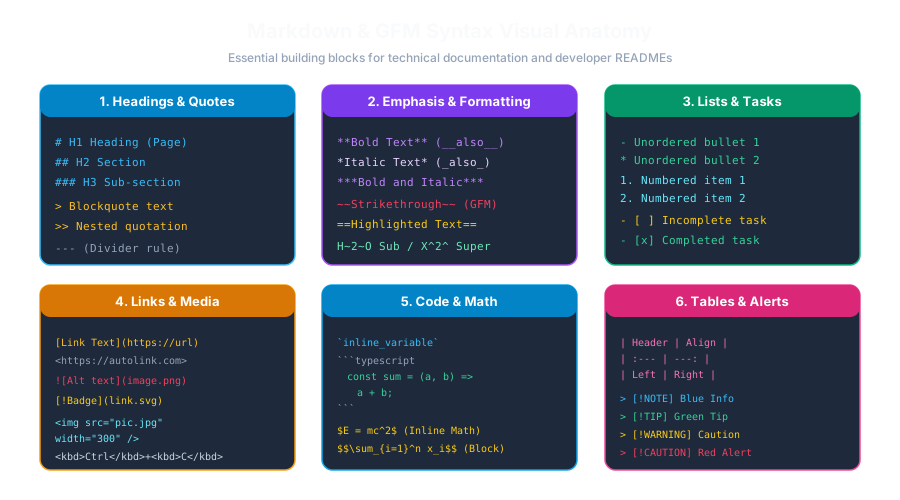
Blockquotes are used to highlight quoted passages from external sources, customer testimonials, legal disclaimers, or important warning notices. They compile directly into semantic HTML <blockquote> elements.
 Click to Zoom
1. Basic Blockquote Syntax
To create a blockquote, prefix the line with a greater-than symbol (>), followed by an optional space:
Rendered Output:
You do not need to prefix every single wrapped line with > (lazy blockquotes work), but doing so makes the raw markdown much cleaner and easier to edit.
2. Multi-Paragraph Blockquotes
To include multiple paragraphs inside a single blockquote, place a > on the empty blank lines between the paragraphs:
3. Nested Blockquotes (Quotes within Quotes)
You can nest blockquotes within each other by adding additional > symbols:
4. Rich Formatting Inside Blockquotes
Blockquotes are containers that can host other Markdown elements, including headings, lists, bold text, and code blocks:
Multiple Choice Questions
1. Which symbol is used to create a blockquote in Markdown?
A. Hash (#) B. Greater-than symbol (>) C. Exclamation mark (!) D. Colon (:) Answer: B Explanation: The greater-than character (>) at the start of a line compiles to an HTML <blockquote> element.
2. How do you create a nested blockquote inside another quote?
A. Use double greater-than symbols (>>) B. Use a plus sign (+) C. Type <quote><quote> D. Indent with 10 spaces Answer: A Explanation: Adding an additional > (e.g. >>) creates a second-level nested blockquote.
3. Which HTML tag is generated by a Markdown blockquote?
A. <pre> B. <blockquote> C. <q> D. <aside> Answer: B Explanation: Markdown blockquotes compile directly to the HTML <blockquote> container element.
4. How do you maintain a single blockquote across multiple paragraphs?
A. Put a > on the blank line between the paragraphs B. Close and reopen the file C. Use a comma D. Blockquotes cannot have multiple paragraphs Answer: A Explanation: Placing a > on the intervening empty line ensures both paragraphs remain inside the same <blockquote> container.
5. Can a blockquote contain other markdown elements such as headings and bulleted lists?
A. No, only plain unformatted text is allowed B. Yes, blockquotes can host headings, lists, bold text, and code snippets C. Only if written in Japanese D. Only on Mac computers Answer: B Explanation: Blockquotes are container blocks in Markdown that can hold headings, lists, emphasis, and code blocks.
Unordered Lists & Bullet Customization
Continue learning with hands-on practice, examples, and exercises in the upcoming topic.
Related Lessons
| Previous Lesson | Next Lesson |
|---|---|
| Text Emphasis: Bold, Italic, Strikethrough & Highlights | Unordered Lists & Bullet Customization |
Practice Quiz
Test your understanding of this lesson with 5 questions. Each question has one correct answer.