Cloud Computing and Virtual Reality
Cloud Computing and Immersive Realities (VR/AR) have revolutionized how businesses store information and how humans interact with digital environments. In Hindi, hum ise samajhte hain "Internet par aadharit digital bhandaran (Cloud) aur aabhasi duniya (Virtual Reality)".
Instead of buying expensive physical hard drives or high-end servers, cloud computing allows us to rent computing power and storage over the internet on demand.
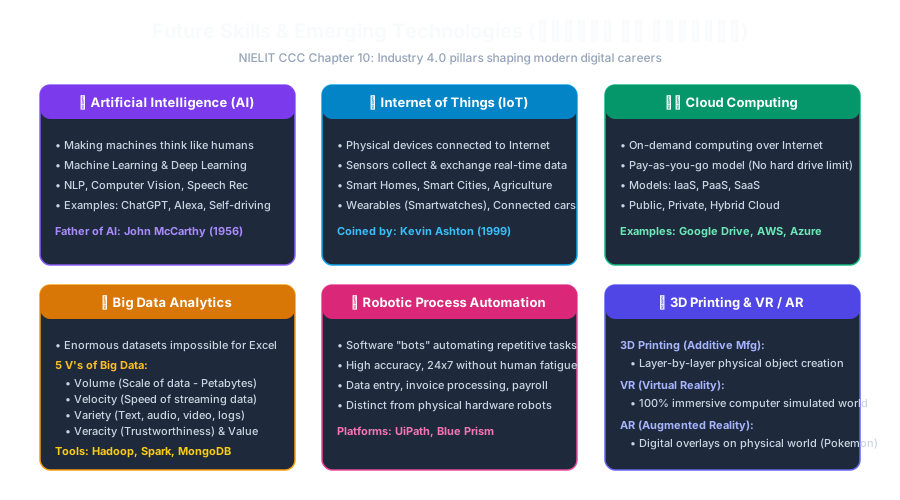 Click to Zoom
1. What is Cloud Computing?
Cloud Computing is the on-demand delivery of computing services—including servers, storage, databases, networking, software, and analytics—over the Internet ("the cloud") with pay-as-you-go pricing.
- Analogy: Electricity in your home. You do not build a power generator in your backyard; you plug into the municipal power grid and pay only for the units you consume. Similarly, cloud computing eliminates the need for expensive physical server rooms.
The Three Main Cloud Service Models (Exam Special):
| Service Model | Full Form | What the Provider Supplies | Examples |
|---|---|---|---|
| IaaS | Infrastructure as a Service | Basic computing infrastructure: Virtual Machines (VMs), raw hard drives/storage, networking firewalls. The customer installs their own OS and software. | Amazon Web Services (AWS EC2), Microsoft Azure VMs, Google Cloud Compute Engine. |
| PaaS | Platform as a Service | A ready-to-use development environment (OS, runtime, web server, database tools) for programmers to build and deploy applications without managing hardware. | Google App Engine, Heroku, AWS Elastic Beanstalk. |
| SaaS | Software as a Service | Fully functional, end-user applications accessible directly through a web browser or mobile app. No installation or maintenance needed by user. | Google Drive / Gmail, Microsoft 365, DigiLocker, Zoom, Salesforce. |
Cloud Deployment Models:
- 1Public Cloud: Owned and operated by third-party providers (Google, Microsoft, Amazon), delivered over the public internet to anyone. Cost-effective.
- 2Private Cloud: Cloud infrastructure used exclusively by a single enterprise or government department (e.g., Indian Railways or Defense Ministry) behind a private firewall.
- 3Hybrid Cloud: Combines public and private clouds, allowing sensitive data to stay on-premise while leveraging public cloud capacity during traffic spikes.
- 4Community Cloud: Shared by several organizations with common compliance or security requirements (e.g., group of nationalized banks).
2. Virtual Reality (VR) vs. Augmented Reality (AR)
Both VR and AR alter our perception of reality, but in fundamentally different ways:
| Feature | Virtual Reality (VR) | Augmented Reality (AR) |
|---|---|---|
| Definition | Completely shuts out the physical world and immerses the user in a 100% computer-generated 3D simulation. | Overlays digital text, 3D animations, or graphics onto the real, existing physical world. |
| Hardware Used | Dedicated VR Headsets (Meta Quest, HTC Vive, PlayStation VR). | Smartphones, tablets, or smart glasses (Google Glass). |
| User Experience | User feels physically present inside another virtual world (deep ocean, Mars surface, virtual cockpit). | User sees their living room floor with a virtual 3D animal or furniture placed on it. |
| Real-World Use Cases | Flight simulator training for fighter pilots, medical surgical simulations, virtual walk-throughs. | Pokémon GO game, Google Maps Live View AR walking directions, IKEA Place furniture preview app. |
 Click to Zoom
3. Advantages of Cloud Computing for Daily Life
- Cost Efficiency: No need to purchase ₹1,00,000 servers; start with a few hundred rupees per month.
- Anywhere Access: Edit your documents from phone, laptop, or cyber cafe via Google Docs or Microsoft Office Online.
- Automatic Backup & Disaster Recovery: If your laptop breaks or gets stolen, your data remains safely stored in the cloud.
Multiple Choice Questions
1. Which cloud computing service model provides end-user applications directly accessible through a web browser (such as Gmail or Google Drive)?
A. IaaS (Infrastructure as a Service) B. PaaS (Platform as a Service) C. SaaS (Software as a Service) D. DaaS (Desktop as a Service) Answer: C Explanation: SaaS delivers complete software applications over the internet to end users, such as Gmail, Microsoft 365, and DigiLocker.
2. Which cloud deployment model is shared exclusively among organizations that have common missions or regulatory requirements?
A. Public Cloud B. Community Cloud C. Personal Cloud D. Ad-hoc Cloud Answer: B Explanation: A Community Cloud is shared by multiple organizations with shared concerns, such as compliance, jurisdiction, or security requirements.
3. What is the fundamental difference between Virtual Reality (VR) and Augmented Reality (AR)?
A. VR requires an internet connection while AR does not B. VR immerses the user completely into a computer-generated world, whereas AR overlays digital images onto the real physical world C. AR can only be viewed on desktop monitors D. VR is only used in financial accounting Answer: B Explanation: VR creates a fully simulated artificial environment through a headset, while AR enhances the real physical world with digital overlays (like Pokémon GO).
4. Which of the following is a prominent example of an Infrastructure as a Service (IaaS) provider?
A. Microsoft PowerPoint B. Amazon Web Services (AWS EC2) C. VLC Media Player D. Notepad++ Answer: B Explanation: Amazon Web Services (AWS EC2) and Microsoft Azure provide virtualized server infrastructure, storage, and networking as an IaaS service.
5. In cloud computing, what does the term 'Elasticity' refer to?
A. The ability to stretch server cables physically B. The ability to dynamically scale computing resources up or down according to real-time demand C. The durability of hard disks D. The speed of typing on a cloud keyboard Answer: B Explanation: Elasticity in cloud computing allows systems to automatically expand or contract resources (RAM, CPU, storage) as user traffic increases or decreases.
Artificial Intelligence: Concept, Goals, and Ethics
Continue learning with hands-on practice, examples, and exercises in the upcoming topic.
Related Lessons
| Previous Lesson | Next Lesson |
|---|---|
| Internet of Things (IoT) and Big Data Analytics | Artificial Intelligence: Concept, Goals, and Ethics |
Practice Quiz
Test your understanding of this lesson with 5 questions. Each question has one correct answer.