Evolution of Computers and IT Gadgets
Evolution of Computers and IT Gadgets (कंप्यूटर का विकास और आधुनिक गैजेट्स)
Computer is an electronic device that takes raw data as Input, processes it according to stored instructions, and produces meaningful Output (Information).
In Hindi, Computer is known as संगणक (Sanganak). Today, computers and IT gadgets have become an essential part of our daily life, education, and government services in India.
 Click to Zoom
1. History of Calculating Devices (शुरुआती गणना यंत्र)
Before modern electronic computers were invented, humans developed mechanical devices to calculate numbers faster:
- 1Abacus (लगभग 3000 BC - चीन): The world's first mechanical calculating device. It uses beads on parallel wires to perform basic addition and subtraction.
- 2Napier's Bones (1617 - John Napier): Used numbered rods for multiplication and division.
- 3Pascaline (1642 - Blaise Pascal): The first mechanical adding calculator (पहला मैकेनिकल कैलकुलेटर) that worked on gears and wheels.
- 4Difference Engine & Analytical Engine (1822 & 1837 - Charles Babbage):
- Charles Babbage is honored as the "Father of Computer" (कंप्यूटर के जनक).
- His Analytical Engine had all key components of modern computers: Input, Mill (Processor), Store (Memory), and Output.
- 1Lady Ada Lovelace: World's First Computer Programmer. She wrote the first algorithm for Babbage's Analytical Engine.
- 2Herman Hollerith (1890): Invented Tabulating Machine using Punch Cards. He later founded the company that became IBM (International Business Machines).
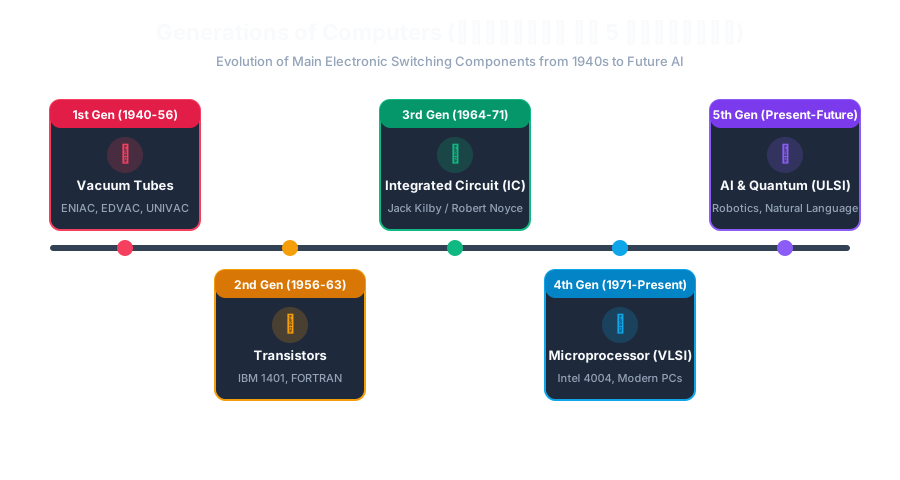
2. The 5 Generations of Computers (कंप्यूटर की 5 पीढ़ियां)
In the NIELIT CCC exam, questions on computer generations and their main switching components are asked frequently. Remember this table carefully:
| Generation | Period | Main Electronic Component (मुख्य पुर्जा) | Memory / Storage | Programming Language | Famous Computers |
|---|---|---|---|---|---|
| 1st Gen | 1940 – 1956 | Vacuum Tubes (वैक्यूम ट्यूब) | Magnetic Drum | Machine Language (0 & 1) | ENIAC, EDVAC, UNIVAC 1 |
| 2nd Gen | 1956 – 1963 | Transistors (ट्रांजिस्टर) | Magnetic Core & Tape | Assembly, FORTRAN, COBOL | IBM 1401, CDC 1604 |
| 3rd Gen | 1964 – 1971 | Integrated Circuits (IC चिप) | Semiconductor Memory | High-Level (BASIC, Pascal, C) | IBM 360, PDP-8 |
| 4th Gen | 1971 – Present | Microprocessor (VLSI / LSI) | Semiconductor (RAM, ROM, SSD) | C++, Java, Python, SQL | IBM PC, Apple Mac, Laptops |
| 5th Gen | Present – Future | AI & Ultra Large Scale (ULSI) | Optical & Cloud Storage | Natural Language Processing (AI) | Param Supercomputer, Robots |
3. Classification of Computers by Size and Capacity
Computers are classified into four main categories based on size, cost, and speed:
- 1Microcomputers (Personal Computers - PC):
- Designed for single individual use (Laptops, Desktops, Tablets, Smartphones).
- Powered by single-chip microprocessors (Intel Core i3/i5/i7, AMD Ryzen).
- 1Minicomputers (Midrange Computers):
- Multi-user computers capable of supporting 10 to 100 users simultaneously.
- Used in small businesses, colleges, and laboratory data processing.
- 1Mainframe Computers:
- Giant high-performance systems supporting thousands of users simultaneously.
- Used for centralized massive transactions in Banks (SBI, PNB), Insurance (LIC), and Indian Railways (IRCTC Reservation).
- 1Supercomputers (सुपरकंप्यूटर):
- The fastest, most powerful, and most expensive computers on earth.
- Speed is measured in FLOPS (Floating Point Operations Per Second).
- Used in weather forecasting (मौसम भविष्यवाणी), satellite launching (ISRO), defense research (DRDO), and nuclear simulations.
- Examples: Frontier (USA - World's fastest), AIRAWAT & PARAM Siddhi-AI (India).
4. Modern IT Gadgets in Daily Life
Today, computing is not restricted to bulky desktop monitors. Smart IT gadgets surround us:
- Smartphones: Powerful pocket computers with touchscreen, GPS, camera, and internet banking.
- Smartwatch & Fitness Trackers: Wearable gadgets that track heart rate, steps, and sleep cycles.
- Tablets (iPad / Android Tab): Portable touchscreen devices ideal for digital note-taking and reading.
- Smart TV: Television with built-in operating system (Android TV) capable of streaming YouTube, Hotstar, and Netflix.
- Drones: Unmanned Aerial Vehicles (UAVs) used for aerial photography, agriculture crop spraying, and surveillance.
Multiple Choice Questions
1. Who is considered the "Father of Computer"?
A. Alan Turing B. Charles Babbage C. Blaise Pascal D. John von Neumann Answer: B Explanation: Charles Babbage is known as the "Father of Computer" because he conceptualized and invented the Analytical Engine (1837), which introduced the fundamental concepts of input, processing, memory, and output.
2. Which electronic component was used in the First Generation of computers?
A. Transistors B. Integrated Circuits (IC) C. Vacuum Tubes D. Microprocessors Answer: C Explanation: First-generation computers (1940–1956) like ENIAC and UNIVAC used Vacuum Tubes as their primary electronic switching device, which produced massive heat and consumed large amounts of electricity.
3. What is the name of India's first indigenous supercomputer developed by C-DAC?
A. PARAM 8000 B. ANURAG C. PRITHVI 100 D. ARYABHATTA Answer: A Explanation: PARAM 8000 was India's first supercomputer built in 1991 by the Centre for Development of Advanced Computing (C-DAC) in Pune under the leadership of Dr. Vijay Bhatkar.
4. Integrated Circuit (IC) chips used in 3rd Generation computers are primarily manufactured using which material?
A. Copper B. Carbon C. Silicon D. Silver Answer: C Explanation: IC chips are semiconductor microelectronic circuits made predominantly of Silicon (Si). Jack Kilby and Robert Noyce are credited with inventing the Integrated Circuit.
5. Which type of computer is used by Indian Railways (IRCTC) and major banking networks to process millions of transactions simultaneously?
A. Microcomputer B. Mainframe Computer C. Palmtop D. Personal Digital Assistant (PDA) Answer: B Explanation: Mainframe computers are high-capacity, multi-processor systems designed to handle vast databases and process millions of simultaneous transactions with high reliability for large organizations like banks and railways.
Applications of Computers in Daily Life
Continue learning with hands-on practice, examples, and exercises in the upcoming topic.
Related Lessons
| Previous Lesson | Next Lesson |
|---|---|
| None | Applications of Computers in Daily Life |
Practice Quiz
Test your understanding of this lesson with 5 questions. Each question has one correct answer.