Concept of Internet, WWW, and IP Address
Concept of Internet, WWW, and IP Address (इंटरनेट, WWW और आईपी एड्रेस)
Today, we take instant messaging, online video streaming, and digital banking for granted. But what exactly is the Internet, how does the World Wide Web (WWW) work, and how do billions of connected devices identify one another?
 Click to Zoom
1. What is the Internet? (इंटरनेट क्या है?)
The Internet (short for Interconnected Networks) is a colossal, worldwide global network of billions of computers, servers, mobile phones, and smart devices communicating using standard rules called Protocols.
History of the Internet (CCC Super Important):
- ARPANET (1969): The grandfather of the modern Internet. Developed by the US Department of Defense (DoD) Advanced Research Projects Agency to connect university computers.
- Vinton Cerf & Bob Kahn: Revered as the "Fathers of the Internet" for co-designing the TCP/IP protocol suite.
- Birth of Internet in India: The Internet was publicly launched in India on 15 August 1995 by VSNL (Videsh Sanchar Nigam Limited).
2. Internet vs World Wide Web (WWW)
Many people mistakenly think the Internet and the Web are the exact same thing. In computer science:
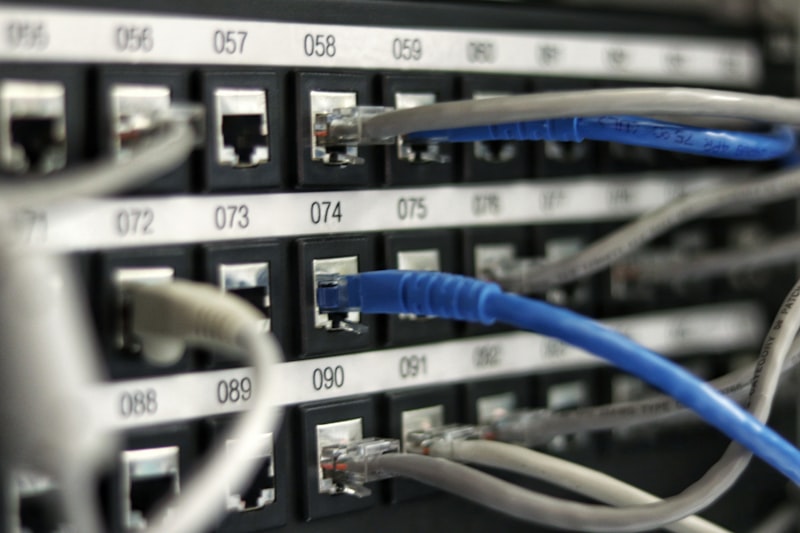
- The Internet (The Infrastructure / Hardware Roads): The physical network of underwater optical fiber cables, satellites, servers, and routers that connect machines worldwide.
- The World Wide Web (The Service / Traffic on Roads): A vast global collection of interconnected hypertext web pages, documents, images, and videos hosted on internet servers.
- Invented in 1989 by British scientist Sir Tim Berners-Lee at CERN in Switzerland.
- Tim Berners-Lee also created the world's first web browser, the HTTP protocol, and HTML.
3. What is an IP Address? (आईपी एड्रेस क्या है?)
Just as your home requires a postal address to receive courier parcels, every device connected to the Internet (laptop, smartphone, smart TV) is assigned a unique numerical label called an IP Address (Internet Protocol Address).
There are two major versions of IP addresses:
+-----------------------+-----------------------------+-----------------------------+
| Feature               | IPv4 (Version 4)            | IPv6 (Version 6)            |
+-----------------------+-----------------------------+-----------------------------+
| Address Length        | **32 Bits** (4 Bytes)       | **128 Bits** (16 Bytes)     |
| Notation Format       | Decimal numbers separated by| Hexadecimal separated by    |
|                       | dots (.)                    | colons (:)                  |
| Example               | `192.168.1.1`               | `2001:0db8:85a3::8a2e:0370`|
| Total Addresses       | Approx. 4.3 Billion ($2^{32}$)| Undecillion ($2^{128}$ - infinite!)|
+-----------------------+-----------------------------+-----------------------------+
4. Domain Name System (DNS - इंटरनेट की फोनबुक)
Computers only understand numbers (IP addresses like 142.250.190.46). But humans cannot memorize dozens of random 10-digit numbers to visit websites!
The DNS (Domain Name System) acts as the Phonebook of the Internet:
- It automatically translates human-friendly domain names (like
www.google.comorwww.mskinstitute.com) into machine-readable numerical IP addresses.
Multiple Choice Questions
1. Who is considered the "Father of the Internet"?
A. Tim Berners-Lee B. Vinton Cerf (and Bob Kahn) C. Charles Babbage D. Bill Gates Answer: B Explanation: Vinton Cerf and Bob Kahn are recognized as the "Fathers of the Internet" for inventing the foundational TCP/IP protocols that govern internet communications.
2. Who invented the World Wide Web (WWW) in 1989?
A. Tim Berners-Lee B. Steve Jobs C. Mark Zuckerberg D. Alan Turing Answer: A Explanation: Sir Tim Berners-Lee invented the World Wide Web (WWW) in 1989 while working as a computer scientist at the CERN laboratory in Switzerland.
3. What is the bit length of an IPv4 address?
A. 16 Bits B. 32 Bits C. 64 Bits D. 128 Bits Answer: B Explanation: An IPv4 address is strictly 32 bits in length, represented as four 8-bit octets separated by dots (e.g. 192.168.1.1). IPv6 is 128 bits.
4. On which historic date was public internet service officially launched in India by VSNL?
A. 26 January 1950 B. 15 August 1995 C. 2 October 2000 D. 1 January 2005 Answer: B Explanation: Public Internet access in India was officially inaugurated on Independence Day, 15 August 1995, by Videsh Sanchar Nigam Limited (VSNL).
5. What system functions as the "Phonebook of the Internet", translating domain names into IP addresses?
A. ISP B. DNS (Domain Name System) C. FTP D. SMTP Answer: B Explanation: The Domain Name System (DNS) translates human-readable web addresses (like google.com) into numerical IP addresses required by networking routers.
Modes of Internet Connection (WiFi, Broadband, Mobile)
Continue learning with hands-on practice, examples, and exercises in the upcoming topic.
Related Lessons
| Previous Lesson | Next Lesson |
|---|---|
| Basics of Computer Networks (LAN, WAN, Topology) | Modes of Internet Connection (WiFi, Broadband, Mobile) |
Practice Quiz
Test your understanding of this lesson with 5 questions. Each question has one correct answer.